

Key takeaways
- August shedding is usually the start of the fall coat blow. Daylight has been shrinking since late June, and shrinking daylight, not falling temperature, is what tells a dog’s follicles to release the old coat.
- Double-coated breeds shed hardest right now: huskies, shepherds, labs, corgis, goldens, malamutes, and most northern mixes.
- Normal shedding is even all over, with healthy skin underneath. Bald patches, redness, scabs, constant scratching, or a dull greasy coat mean something else is going on.
- The cheap fixes beat the expensive ones. An undercoat rake, a bath followed by a real dry-out, and a damp rubber glove on the couch remove more hair than most gadgets.
- Late summer is peak flea season, so rule out fleas before you blame the calendar.
What’s in this guide
- Why is my dog shedding so much in August?
- Does temperature or daylight control shedding?
- Which dogs shed hardest in late summer?
- Is this normal shedding or a skin problem?
- Does air conditioning make shedding worse?
- How do I actually reduce the hair?
- What’s worth buying and what isn’t?
- When should you call the vet?
- Frequently asked questions
Your dog is shedding this much in August because the fall coat change has already started. Day length peaked back in late June and has been shrinking ever since, and that shrinking daylight is the signal that tells hair follicles to push out the old coat and grow the winter one. It feels early because it’s still hot outside, but the coat runs on the calendar of light, not the thermometer.
For most dogs this is normal and it will taper off over several weeks. The exception is a dog who is scratching, chewing, or losing hair in patches, which points to fleas, allergies, or a hormone issue instead. As of late August 2026, flea pressure is at its yearly high in most of the country, so that’s the first thing to rule out.
Why is my dog shedding so much in August?
Because the follicles that grew a coat in spring have reached the end of that cycle, and shorter days are giving the release signal. Dog hair grows in phases: an active growth phase, a resting phase, and a shedding phase. Seasonal light shifts push large numbers of hairs into the shedding phase at once, which is why it arrives as a blizzard instead of a trickle.
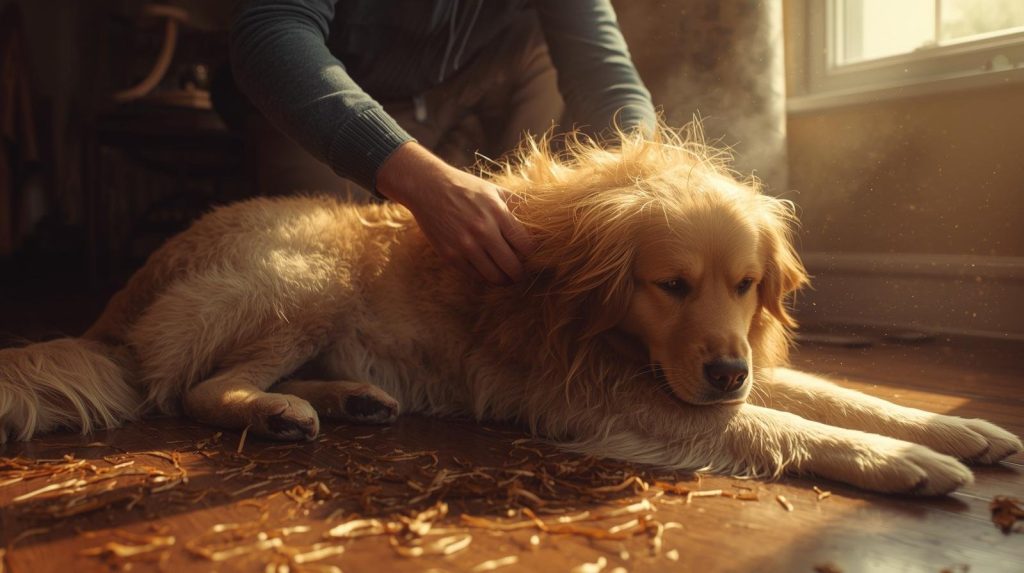
In dogs with an undercoat, that soft insulating layer is what comes out. You’ll see it as clumps and tufts rather than individual guard hairs, and it will keep coming for two to six weeks depending on the dog. A single dog can drop what looks like an entire second dog’s worth of fluff.
There’s a second, less obvious factor. Dogs who live mostly indoors under artificial light get a muddled version of the seasonal signal, so they shed a moderate amount all year with softer peaks. If your dog is an indoor dog and August feels like a sudden explosion, more time outside in the evenings this month is likely sharpening the signal.
Does temperature or daylight control shedding?
Daylight, mostly. Temperature influences how thick the new coat comes in, but the timing of the shed is set by photoperiod, the number of hours of light a dog’s eyes register each day. That’s why dogs in mild climates still blow coat on a schedule, and why a heat wave in October doesn’t stop the winter coat from arriving.
This is also why you can’t fix shedding by cranking the AC. The house being cool doesn’t tell the follicles anything. It just means the hair lands on your floors instead of the yard.
Which dogs shed hardest in late summer?
Double-coated breeds, without much competition. Huskies, malamutes, German shepherds, Australian shepherds, corgis, chows, Labradors, golden retrievers, Bernese mountain dogs, and any mix carrying that ancestry will blow undercoat twice a year, and late summer into fall is the bigger of the two blows.
Single-coated dogs like poodles, bichons, Maltese, and most terriers don’t blow coat the same way. They shed lightly and continuously, and their hair tends to stay in the coat until you brush it out. If a single-coated dog suddenly starts leaving hair everywhere in August, that’s more likely a health flag than a season.
Short-haired dogs are their own category of annoying. Beagles, pugs, and boxers shed short stiff hairs that weave into upholstery instead of rolling into tumbleweeds. Less visible volume, harder to get out of a couch.
Is this normal shedding or a skin problem?
Normal seasonal shedding is even, symmetrical, and leaves healthy skin behind. Part the coat and look at the skin: it should be pale or lightly pigmented, smooth, and not flaky, red, or bumpy. The dog should be comfortable, not chewing at their flanks or scooting.
Warning signs are specific. Bald spots, hair that comes out in a circular patch, black or thickened skin, a rancid or yeasty smell, scabs along the spine and tail base, or heavy dandruff all point away from a normal coat blow. So does hair loss on both sides of the body in a mirror pattern, which can suggest a thyroid or adrenal issue.
Flea allergy dermatitis is the most common late-summer mimic. One bite can set off weeks of itching in a sensitive dog, and the hair loss clusters near the tail base and back legs. Before you spend a dime on shedding tools, check that area with a flea comb and confirm the dog’s preventive is current.
Does air conditioning make shedding worse?
Not the shedding itself, but very dry indoor air can make skin flaky and coat brittle, which makes the whole situation look and feel worse. Running AC hard all summer pulls humidity out of the house. Dogs with existing skin sensitivity notice it first.
If the coat looks dull and the skin flakes when you brush, adding a little humidity back helps more than any coat supplement. A small unit in the room where the dog sleeps is enough, and the ones you’ll keep using are the ones you can rinse without disassembly, which is worth thinking about before you buy since a humidifier that’s a pain to clean turns into a mold farm fast. On the flip side, if your house runs damp rather than dry, that’s a different problem with a different fix, and excess humidity has its own set of consequences.
One more AC-adjacent note. All that airborne hair ends up in your filters, so change or wash them more often during a coat blow than you normally would.
How do I actually reduce the hair?
Get the dead undercoat out on purpose, outdoors, before it falls out on its own indoors. That’s the entire strategy. Every hour you spend brushing during a coat blow is hair that never reaches your rug.
Use an undercoat rake, not a bristle brush. A rake has widely spaced metal pins long enough to reach through the guard hairs and pull the loose fluff from underneath. A slicker brush helps for finishing and for the feathering on legs and tail, but it mostly skims the surface.
Brush daily during the peak, ten minutes at a time, in the direction the coat grows. Work in sections and stop when the rake stops filling up. Forcing more passes over the same spot irritates skin and gets you nothing.
A bath speeds the whole thing up. Warm water loosens dead undercoat, and the drying step is what releases it in volume, which is why groomers use a high-velocity dryer and why a bathed-then-air-dried dog just shed all over your house instead. If you bathe at home, towel hard, then brush while the coat is still slightly damp.
What not to do: don’t shave a double-coated dog to reduce shedding. The undercoat and guard coat grow back at different rates, the guard coat may come back patchy or coarse, and you remove the layer that insulates against heat and blocks sun. It also doesn’t stop shedding. It just makes the shed hairs shorter and pricklier.
What’s worth buying and what isn’t?
Worth it: a decent undercoat rake, a rubber curry or grooming glove, and a vacuum that handles hair without clogging. That’s the short list, and the first two cost very little.
The single best trick for furniture costs nothing extra. Put on a slightly damp rubber glove, or use a damp rubber squeegee, and drag it across upholstery in one direction. The hair balls up into a rope you can lift off, and it beats every sticky roller and specialty fabric gadget on the market.
Skip the shedding supplements unless a vet found an actual deficiency. Omega-3 fatty acids can help skin quality over a couple of months, but nothing you feed will stop a seasonal coat blow, and the products marketed as shed-stoppers are mostly fish oil with better packaging. Same goes for de-shedding shampoos, which are fine but do far less than the brushing you do afterward.
For floors, the thing that matters is not suction number on the box. It’s whether the brush roll tangles and whether the filter clogs with fine undercoat. Anti-tangle brush designs and washable filters make a bigger practical difference than a bigger motor, which is the same reason robot vacuums vary so much on pet hair specifically. If you’d rather do quick daily passes than one big weekly clean, a cordless stick is the format most pet owners actually reach for.
Aspiron Canister Vacuum

Aspiron 1700W Canister Vacuum Cleaner, 45Kpa Bagless Vacuum Cleaner
A canister vacuum makes sense during a coat blow if your problem is stairs, upholstery, and vents rather than open floor. The long hose and switchable heads let you get hair out of couch seams and baseboards without dragging an upright around. Bagless matters here too, since you’ll be emptying it far more often than usual for the next few weeks.
- Hose and multiple heads reach stairs, upholstery seams, and vents
- Bagless bin for frequent emptying during heavy shedding weeks
Airborne dander is the other half of the problem, especially if someone in the house has allergies that flare in fall. A purifier won’t reduce shedding, but it does pull the fine floating stuff before it settles, and sizing it to the room is what determines whether it does anything at all.
Roborock Washable Filter

Roborock Washable Filter Replacement for Dyad Pro Combo Cordless Wet Dry Vacuum Cleaner
If you already own the wet dry vacuum this filter fits, keep a spare during shedding season. Fine undercoat clogs a filter much faster than dust does, and a clogged filter is the usual reason suction seems to die out of nowhere. Washable means you can rotate two and always have a dry one ready.
- Washable, so you can rotate two and always have a dry spare
- Fine undercoat clogs filters fast and kills suction
When should you call the vet about shedding?
Call if the skin looks wrong, not if the hair volume looks high. Redness, scabs, open sores, black or leathery patches, a strong odor, or hair that comes out with a gentle tug leaving bare skin all warrant a visit. Same for a dog who is scratching or chewing enough to interrupt sleep.
Also call if shedding comes with other changes: weight gain without more food, low energy, drinking and urinating more than usual, or a coat that grows back slowly after clipping. Those pair with hair loss in thyroid and adrenal conditions, and both are treatable once diagnosed.
Stress sheds are real and short. A boarding stay, a move, a vet visit, or new back-to-school chaos in the house can trigger a sudden release of hair within a day or two. It settles on its own once the dog does.
Frequently asked questions
How long does the August shedding last?
Usually two to six weeks for a double-coated dog, sometimes stretching into October if the fall is warm. Daily brushing shortens the feeling of it because you’re removing the coat on your schedule instead of the dog’s. Indoor dogs under artificial light often shed more moderately but for longer.
Is it bad to bathe a dog during a coat blow?
No, a bath helps, as long as you dry the coat thoroughly and brush afterward. Warm water loosens dead undercoat and the drying step releases it in bulk. Avoid frequent bathing with harsh shampoo, which strips oils and leaves skin flaky.
Will shaving my dog stop the shedding?
No, and on a double-coated breed it can cause lasting damage. The undercoat and guard hairs regrow at different rates, so the coat may come back patchy or coarse, and you remove the dog’s natural insulation and sun protection. Shaved dogs still shed, just in shorter pieces that stick to fabric more stubbornly.
Could diet be causing the heavy shedding?
Diet affects coat quality more than shedding volume. A dog on a complete, balanced food will still blow coat on schedule, but poor protein or fat levels show up as dull, brittle hair and flaky skin. If the coat looks unhealthy on top of shedding heavily, talk to your vet before switching food or adding supplements.
Why is my short-haired dog shedding in August too?
Short-haired dogs still respond to daylight changes, they just don’t produce visible tufts. Their hairs are shorter, stiffer, and more likely to embed in upholstery and car seats than to collect in clumps. A rubber curry brush and a damp glove on furniture work better for them than a rake.
The honest summary: nothing you buy will stop an August coat blow, because it isn’t a problem to fix. It’s a schedule your dog is running, and your only real lever is where the hair lands. Brush outside, bathe and dry properly, and keep a rubber glove near the couch.
If the skin under all that hair looks healthy and the dog isn’t itchy, ride it out. If it doesn’t, book the vet visit before you spend money on tools. And if you’re upgrading cleaning gear for the season anyway, it’s worth checking what’s currently discounted across the home and pet categories rather than paying full price in the middle of the messiest month.