

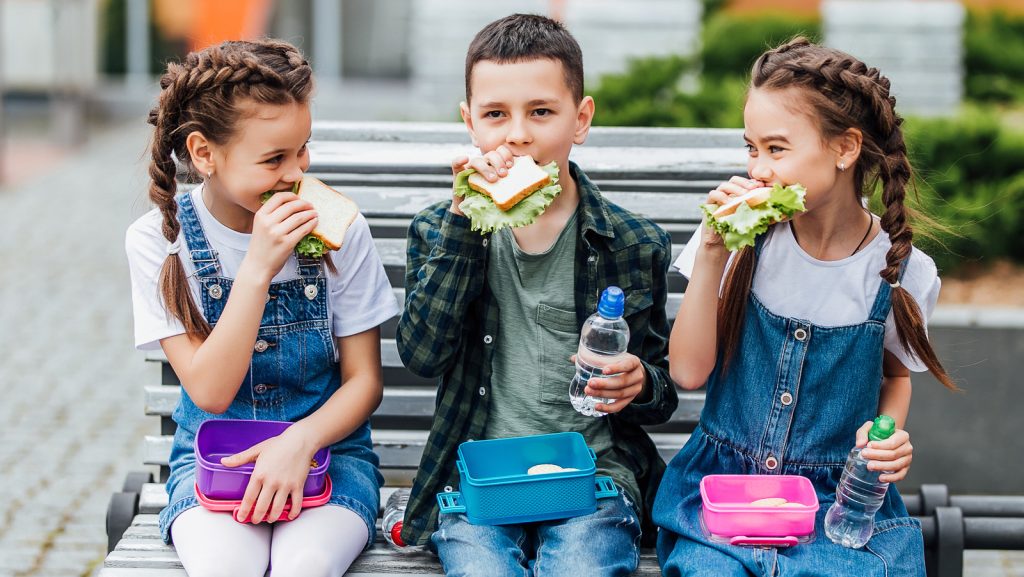
Key takeaways
- Most kindergartners are well served by a lunch box about 8 to 10 inches wide, 6 to 8 inches tall, and 3 to 4 inches deep.
- Inside, aim for roughly 3 to 4 cups of food capacity (about 24 to 32 ounces). That is lunch plus a snack for a five-year-old.
- Fit matters more than capacity. Measure the classroom cubby or lunch bin and the backpack opening before you buy.
- A slim ice pack still has to slide in. If it does not, the bag is too small for a school day.
- Water bottles almost always ride in the backpack side pocket, so you do not need to size the lunch box around one.
What’s in this guide
- What size lunch box does a kindergartner need?
- How big is a kindergarten lunch bag in inches?
- How much food actually fits, and how much will they eat?
- Does the lunch box have to fit inside the backpack?
- What about the classroom cubby or lunch bin?
- Where does the water bottle go?
- Which lunch box styles work best for five-year-olds?
- When is a bigger lunch box the right call?
- What can you skip?
- Backpack and lunch box sets sized for little kids
- Frequently asked questions
For kindergarten, buy a lunch box around 8 to 10 inches wide, 6 to 8 inches tall, and 3 to 4 inches deep, holding roughly 3 to 4 cups of food. That is enough for a sandwich or a bento tray, two small sides, and one slim ice pack, which is more than most five-year-olds finish in a 20 minute lunch period.
The mistake almost every parent makes in August is buying too big. A large insulated bag looks like a safe choice until your kid cannot get it out of the cubby, cannot close the zipper, or carries home three quarters of the food every day.
What size lunch box does a kindergartner need?
Small. A kindergarten lunch box only needs to hold about 3 to 4 cups of food, which is a sandwich cut in half, a piece of fruit, a small side, and a snack for later. Anything past that is dead weight your child hauls twice a day.
The reason to keep it tight is not just the food. Lunch periods in kindergarten often run 20 to 30 minutes including walking there, sitting down, and opening containers. A five-year-old spends a big chunk of that fighting lids, so less food in the bag means more food eaten.
There is also the carrying problem. A packed lunch box with an ice pack and a full water bottle can easily push past two pounds, and that sits on top of whatever else is in the backpack.
How big is a kindergarten lunch bag in inches?
Standard kid-sized insulated lunch bags land around 9 inches wide, 7 inches tall, and 3 to 4 inches deep, and that is the sweet spot for kindergarten. Bags marketed for adults or teens usually run 10 to 12 inches wide and 6 or more inches deep, which is too much bag for a five-year-old.
Depth is the number people ignore. A bag deeper than about 4 inches turns into a pit where the applesauce pouch disappears under the sandwich, and a kid at a crowded lunch table will not dig for it.
If you are shopping around a bento box you already own, measure the box first and add roughly an inch in each direction for the insulation and the ice pack. Most kids’ bento trays run close to 9 by 7 by 2 inches, so a 10 by 8 by 4 bag swallows one comfortably.
How much food actually fits, and how much will they eat?
Three to four cups of capacity is plenty, and your child will probably eat somewhere between half and two thirds of it. Five-year-olds eat in small volumes, and school lunch is a social event as much as a meal.
A practical fill looks like this: half a sandwich or a wrap, about a half cup of fruit, a half cup of vegetables or crackers, a cheese stick or yogurt tube, and one small treat. That fits in a four-compartment bento tray with nothing left over.
Pack a little less than you think for the first two weeks, then adjust based on what comes home. Sending too much food teaches a kid that finishing is impossible, and it makes the leftovers harder to read.
Does the lunch box have to fit inside the backpack?
In many kindergarten classrooms, yes, and this is the single most common sizing failure. Plenty of schools ask that lunch travels inside the backpack so hands are free on the bus and in the hallway.
Kindergarten backpacks usually run 12 to 15 inches tall, and the main compartment opening is narrower than the bag looks. A 9 by 7 by 3 lunch box slides in. A 12 inch wide cooler bag does not, or it goes in at an angle and jams the zipper.
Combo sets solve this by design, since the lunch box is built to clip on or tuck inside the pack it ships with. If you are still deciding on the pack itself, our guide to what size backpack a kindergartner needs covers the height and torso fit side of the same problem.
What about the classroom cubby or lunch bin?
Check with the teacher, because the cubby often sets the real size limit. Many kindergarten cubbies are around 12 inches wide and 12 inches tall, and the backpack alone eats most of that.
Some classrooms use a shared crate or bin for lunches instead, and those hold maybe 20 lunch boxes if everyone’s is normal-sized. The oversized one gets crushed on the bottom or left on the floor, which is how you end up with a squashed sandwich and a soaked bag.
Teachers usually mention this in the welcome letter or at the open house. If yours has not, a one-line email in the first week is worth more than any spec sheet.
Where does the water bottle go?
In the backpack’s side pocket, not the lunch box. Sizing a lunch bag to fit a bottle pushes you two inches deeper than you need, and a bottle standing inside an insulated bag tips over and crushes everything around it.
For kindergarten, a 12 to 16 ounce bottle is the right range. Bigger bottles are heavy when full, do not stand up in a small side pocket, and get refilled at the classroom fountain anyway.
Keep the bottle out of the lunch box and it also dries faster, which is half of why school containers start smelling. If yours already has that funk, our walkthrough on getting the smell out of a lunch box covers the baking soda and vinegar routine that actually clears it.
Which lunch box styles work best for five-year-olds?
A wide-mouth soft bag with a single top zipper and a bento tray inside beats everything else at this age. The zipper pull should be big enough to grab with cold or slippery hands, and the opening should let the whole tray come out in one motion.
Skip anything with a buckle, a magnetic latch that needs two hands, or a lid that clips on four sides. Test it at the kitchen table before school starts: hand your child the packed box and see if they can open it, close it, and reopen it without help.
Wipeable liners are worth prioritizing over insulation performance. Nothing in a kindergarten lunch needs to stay cold for eight hours, but every kindergarten lunch box gets yogurt in it eventually.
When is a bigger lunch box the right call?
Go up a size if your child is in full-day care after school, eats two packed meals, or brings a thermos of hot food. A wide-mouth kids’ thermos is around 3 inches across and 6 inches tall, and it needs its own vertical space next to the tray.
In that case, a bag closer to 10 by 8 by 5 inches makes sense, and you may need to accept that it clips to the outside of the backpack. That is fine as long as the school allows it and the clip is strong enough to survive a playground.
Otherwise, resist the upgrade. A bigger bag does not make a kid eat more, it just gives the leftovers more room to slide around.
What can you skip?
Skip heated or electric lunch boxes entirely for this age. They need an outlet, they take 30 to 40 minutes to warm through, and hot food in the hands of a five-year-old at a cafeteria table is a bad trade.
Skip hard-sided metal lunch boxes too, charming as they look. They dent, they clang, they do not compress into a full cubby, and the latch is usually stiffer than small fingers can manage.
You can also skip the giant reusable ice pack. One slim four by six inch pack, frozen overnight, keeps a small lunch cool through a morning, and it leaves you the space you paid for. While you are stocking up for the school year, our running list of current deals is where the back-to-school gear lands as it gets marked down.
Backpack and lunch box sets sized for little kids
If you want the fit problem solved for you, a matched set is the shortcut. The lunch box in these sets is built around the pack, so it slides in or clips on without the guesswork.
Champion Kids' Mode 2-Piece Set
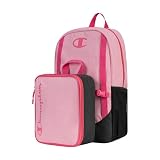
This is the pick if you want a known brand and a two-piece set with nothing extra in the box. The lunch compartment is insulated and sized to sit inside the pack, and the backpack has a proper water bottle pocket so the bottle stays out of the food. Padded straps matter more than they sound at this age, since a kindergartner carries the same weight on a much smaller frame.
- Insulated lunch box sized to the matching backpack
- Padded straps and a side water bottle pocket
Glodwheat Daisy 3-Piece Set

A three-piece set for kids who want a pattern rather than a logo, with a pencil case included that you will need eventually anyway. The lunch box is the small soft-sided type that fits a standard kids’ bento tray plus an ice pack. Lightweight and water-resistant is the right spec combination for a five-year-old who sets things down in puddles.
- Backpack, lunch box, and pencil case in one buy
- Lightweight, water-resistant build for younger kids
Jafeton Gamer 3-Piece Set

Same idea in a gamer print for kids who have opinions about their bag. It comes as a backpack, lunch box, and pencil pouch, so the lunch box already matches the pack’s opening. Check the backpack height against your child’s torso before you commit, since prints like this are often sized up toward elementary.
- Matched backpack, lunch box, and pencil pouch
- Lunch box sized to slide into the pack's main compartment
Frequently asked questions
What are the dimensions of a standard kids’ lunch bag?
Most kid-sized insulated lunch bags measure roughly 9 inches wide, 7 inches tall, and 3 to 4 inches deep. Adult lunch bags run 10 to 12 inches wide and deeper than 4 inches, which is more than a kindergartner needs. Anything in that kid range holds a bento tray, a drink pouch, and a slim ice pack.
Should the lunch box fit inside the backpack or clip to the outside?
Inside is safer if your school allows either, because a clipped bag swings, catches on bus seats, and comes unhooked at recess. Measure the backpack’s main compartment opening first, since a bag wider than about 10 inches usually will not go in flat. If you need a thermos, clipping on the outside may be the only option.
Do I need a bento box or will regular containers work?
Regular containers work, but a single bento tray is easier for a five-year-old because there is one lid to open instead of four. If you use separate containers, test each lid at home and swap out any your child cannot open alone. Snap-lid containers with a single tab are the friendliest.
How do I keep a kindergarten lunch box from smelling?
Empty it the same day, wipe the liner with a damp cloth, and leave it unzipped overnight so the inside dries fully. Trapped moisture is what feeds the smell, not the food itself. A weekly wipe with a baking soda paste, then a rinse, handles anything that builds up.
Buy small, measure the cubby and the backpack opening, and run the open-and-close test at the kitchen table before the first day. Those three steps prevent almost every lunch box problem parents run into in September.
The rest of the school-year mess is laundry. When the first playground disaster arrives, the same logic applies to getting grass stains out of white socks, and if you are already thinking a few months ahead, cubby space gets a lot tighter once waterproof winter boots join the pile.