

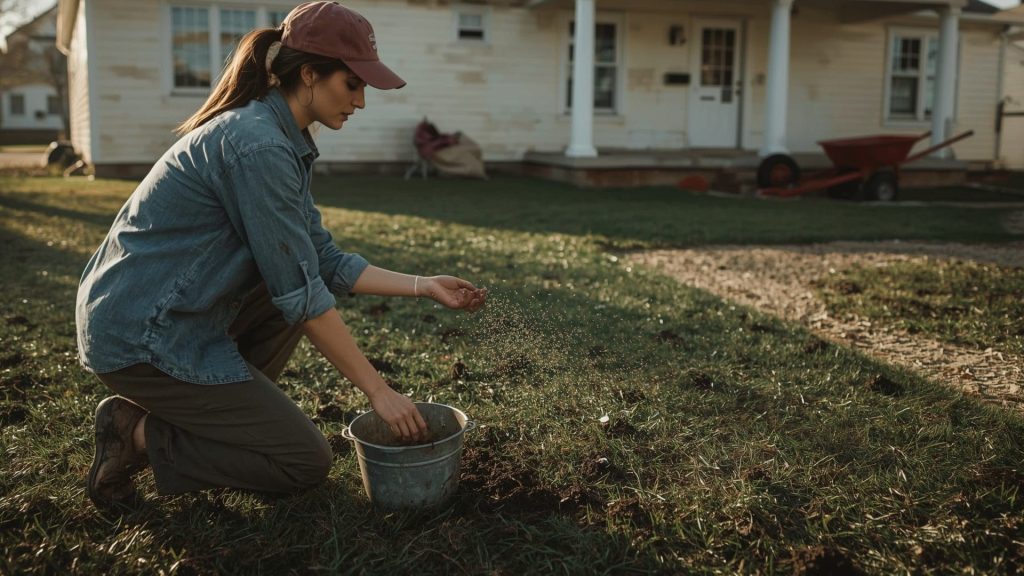
The short answer
- Yes. For cool-season grass (tall fescue, Kentucky bluegrass, perennial ryegrass, fine fescue), September is the best overseeding month of the year in most of the United States.
- Count back about 45 days from your average first frost date. That is your deadline. North of the Ohio River, it usually lands in mid-September. In the mid-Atlantic and transition zone, you have until early October.
- Warm-season lawns (Bermuda, zoysia, St. Augustine, centipede) are a different answer. September overseeding there is only for temporary winter color with ryegrass, not for thickening the lawn permanently.
- Seed-to-soil contact and daily water matter more than which bag you buy. If you cannot water lightly once or twice a day for two to three weeks, wait until you can.
- Do not put down crabgrass preventer within about 12 weeks of seeding. It stops grass seed just as well as it stops weeds.
Yes, September is a fine time to overseed, and for cool-season grass it is the best time. Soil is still warm from summer, so seed germinates fast, while the air has cooled enough that seedlings are not fighting heat stress. Crabgrass and most summer weeds are done competing for space by then.
The catch is that “September” covers a lot of ground. A lawn in Minnesota and a lawn in North Carolina have very different deadlines, and a lawn in Georgia has a different question entirely. Here is how to figure out which one is yours. Updated for the fall 2026 seeding window.
What this guide covers
- Why is September the best month to overseed?
- What is the latest you can overseed in September?
- Which grass seed should you use for a fall overseed?
- Can you overseed Bermuda or St. Augustine in September?
- How do you overseed a lawn, step by step?
- How often do you water new grass seed in September?
- What ruins a September overseed?
- Do you need a slice seeder, or is a rake enough?
- Frequently asked questions
Why is September the best month to overseed?
Because soil temperature and air temperature finally disagree in your favor. Cool-season grass seed germinates best when the soil about two inches down sits between 50 and 65 degrees, with daytime air in the 60s and low 70s. September gives you both at once.
Spring gives you the opposite problem. Soil warms slowly, so seed sits there, and by the time seedlings have roots, summer heat arrives and crabgrass is already up and running. Fall seedlings get two cool growing seasons, autumn and the following spring, before they face real heat.
There is also less competition. Summer annual weeds are finishing their life cycle in September instead of stealing water and light from your seedlings.
What is the latest you can overseed in September?
Count back about 45 days from your average first frost date. New grass needs roughly six weeks of growing weather to germinate, root, and harden off before cold shuts things down.
In the upper Midwest, New England, and the northern Plains, first frost often arrives in early to mid October, which puts your deadline around September 1 to 15. In the mid-Atlantic, Ohio Valley, and Pacific Northwest, first frost is usually late October, so you can seed through the end of September and often into the first week of October. In the transition zone (Tennessee, Kentucky, Missouri, northern Arkansas), mid-September through early October is the sweet spot.
Seed put down after that deadline is not always wasted, but it is a gamble. Late seed may germinate and then die over winter, or it may sit dormant and sprout in spring, which works out sometimes and fails other times.
Which grass seed should you use for a fall overseed?
Match what you already have, or upgrade to turf-type tall fescue if you are in the transition zone. Mixing incompatible grass types gives you a patchy lawn with obvious color and texture differences.
Germination speed varies a lot, and that matters when you are racing the frost. Perennial ryegrass sprouts in 5 to 10 days, tall fescue in 7 to 14, and Kentucky bluegrass in 14 to 30. If you are seeding late in the month, a mix with ryegrass in it gives you visible results faster.
Overseeding rates per 1,000 square feet run lower than new-lawn rates. Roughly 4 to 6 pounds for tall fescue, 4 to 5 for perennial ryegrass, 3 to 4 for fine fescue, and 1 to 2 for Kentucky bluegrass. Piling on double the seed does not give you double the grass, it gives you crowded seedlings competing with each other.
One thing worth reading on the bag: the weed seed and other crop percentages. Cheap contractor mixes often carry more filler and inert matter, which means you are spreading less actual grass than the bag weight suggests.
Can you overseed Bermuda or St. Augustine in September?
Not in the way you are probably hoping. Warm-season grasses spread by runners and are best thickened in late spring or early summer when they are actively growing, not in fall when they are heading toward dormancy.
What people in the South do in fall is overseed Bermuda with perennial ryegrass for temporary winter color. That is done when soil temperatures drop below about 70 degrees, usually October in most of the Sunbelt. The ryegrass greens up the lawn through winter and dies off in late spring.
Be honest about whether you want that. Winter ryegrass competes with your Bermuda during spring green-up and can slow it down. Plenty of southern homeowners skip it and let the lawn go tan for a few months.
St. Augustine, centipede, and zoysia should not be overseeded with ryegrass at all. They handle competition poorly and you can end up thinning the lawn you were trying to help.
How do you overseed a lawn, step by step?
The whole job comes down to getting seed touching bare soil, then keeping that soil damp. Everything else is detail.
Mow shorter than usual, around 1.5 to 2 inches, and bag the clippings. Short grass lets seed fall to the ground instead of hanging up in the canopy.
Rake out dead thatch, or core aerate if the soil is compacted and water puddles after rain. Core aeration pulls plugs and leaves hundreds of little seed pockets, which is the single most useful thing you can do for a thin lawn on clay.
Spread the seed with a broadcast spreader at half rate in two passes, walking perpendicular directions on the second pass. That evens out the coverage and hides the streaks you would otherwise see in October. Rake lightly afterward so seed settles into the soil surface.
Apply a starter fertilizer at seeding. Some states restrict phosphorus on established lawns, but new seedings are typically exempt, so read your bag and your local rules. Plan a second feeding about four to six weeks later.
Expect to spend real time on your knees during this. If your yard clothes already look rough, sturdy work pants with reinforced knees hold up far better than jeans, and you can see how double knee work pants compare by fit before the fall chore list gets long.
How often do you water new grass seed in September?
Light and frequent until germination, then less often and deeper. The goal is to keep the top half inch of soil consistently damp, because a seed that swells and then dries out is a dead seed.
Plan on two to three short waterings a day for the first two to three weeks, roughly 5 to 10 minutes each, enough to darken the surface without creating runoff. September rain helps, but do not assume it is enough. A sunny 75 degree afternoon dries a seedbed faster than people expect.
Once seedlings are up and around an inch tall, cut back to once a day. When they reach mowing height, shift to deep watering two or three times a week to push roots down.
Wait to mow until the new grass is about three inches, and use a sharp blade. A dull blade yanks shallow-rooted seedlings out of the ground instead of cutting them.
What ruins a September overseed?
The most common killer is weed preventer. Crabgrass preventers work by stopping seeds from establishing roots, and they do not distinguish between crabgrass and the fescue you just paid for. Keep pre-emergent off the lawn for about 12 weeks before and after seeding, or through three to four mowings of the new grass.
Two products are the exception because they are labeled for use at seeding: siduron and mesotrione. If you have a heavy weed problem and cannot wait, those are what to look for on the label.
The second killer is skipping the soil contact step. Seed broadcast over thick thatch or long grass never reaches dirt, and most of it feeds birds instead.
The third is a straw mulch that turns into a weed problem. If you mulch, use clean straw sold as seed-free or use a paper-based mulch, because ordinary bales often carry their own weed seed.
And a small one worth mentioning: fresh seedlings plus kids equals green knees and green socks. Fall laundry gets easier if you know what actually removes grass stains from white socks, because the standard detergent-and-hope approach sets them.
Do you need a slice seeder, or is a rake enough?
For a thin lawn, a rake and a broadcast spreader are enough. For a compacted or badly thinned lawn, renting a core aerator for half a day is money well spent. A slice seeder is worth renting only when you are reseeding a large area that is more dirt than grass.
Here is the honest cost math. Rental machines are priced by the half day, and by the time you have hauled one home and back, you have spent a Saturday. If your lawn is 80 percent covered and just looks tired, the machine buys you very little over aeration plus seed.
Small bare spots are a separate job from overseeding the whole yard. Patch products that combine seed, mulch, and a light fertilizer save you from mixing your own topdressing for a few square feet, and they hold moisture better than bare seed on hard ground.
Scotts EZ Seed Patch & Repair

This is the fix for dog spots, worn paths by the gate, and the strip along the driveway, not for reseeding an entire yard. The mulch coating swells and holds water, which covers you when you cannot water three times a day. Sun and shade blends give you the most flexibility if your bare patches are in different light.
- Seed, mulch, and fertilizer combined for bare spots
- Mulch coating swells and holds moisture between waterings
- Sun and shade blend covers mixed light conditions
If you are pricing out fall yard supplies, it is worth checking the current deals hub in early September, since garden inventory gets marked down as stores flip shelf space to holiday goods.
Frequently asked questions
Is it too late to overseed at the end of September?
It depends on your frost date, not the calendar. If your average first frost is late October or later, the end of September is still fine. If you typically frost in the first half of October, you are past the ideal window and should either seed immediately and water diligently or wait and do a dormant seeding in late fall.
Do you have to aerate before overseeding?
No, but it helps a lot on compacted or clay soil. If a screwdriver pushes into damp soil easily, a good raking is enough. If it takes real force, core aerate first and spread seed right afterward so it drops into the holes.
Can you put down fertilizer and grass seed at the same time?
Yes, if it is a starter fertilizer meant for new seedings. Regular high-nitrogen lawn fertilizer pushes the existing grass to grow faster and shade out your seedlings. Weed and feed products should be avoided entirely around seeding time.
How long until a September overseed looks like a lawn?
Perennial ryegrass shows green in about a week, tall fescue in one to two weeks, and Kentucky bluegrass can take a month. Full thickness usually takes two growing seasons, so expect a noticeably better lawn by next spring rather than by Halloween.
Will heavy rain wash away new grass seed?
On flat ground, usually not, if you raked the seed in. On slopes, yes, and that is where a light mulch or an erosion blanket earns its place. Avoid seeding right before a forecast of heavy storms if your yard has any real grade to it.
The bottom line on September seeding
Look up your average first frost date, subtract about six weeks, and you have your answer. If that date has not passed, mow short, get seed onto real dirt, and commit to watering daily for two to three weeks. If you cannot commit to the watering, spend the money in spring instead, because unwatered seed is just an expensive way to feed birds.
September is a busy month for households, between school lunches and the first cold mornings. If you are also fighting a musty lunch box smell or sorting what size lunch box a kindergartner actually needs, the lawn can wait until the weekend. Just do not let it wait until November, when the only footwear that makes sense outside is a pair of waterproof winter boots and the seeding window has closed for the year.