

The short answer
- Hang the clothes outside on a dry, breezy day for a few hours. Moving air removes most light storage smells.
- If a spot still smells, mist it with cheap plain vodka or a 1:1 mix of white vinegar and water. Then let it dry fully in open air.
- Seal the clothes in a bag or bin with an open box of baking soda or some activated charcoal for 24 to 48 hours. This absorbs the last traces.
- If you see spots or fuzzy patches, or the smell comes back within a day, mildew is growing in the fibers. That needs a real wash.
In this guide
- Why do clothes smell musty after storage?
- What is the fastest way to remove the smell without washing?
- Does a vodka or vinegar spray work on musty clothes?
- Can baking soda or charcoal pull the smell out?
- Will a garment steamer or the dryer help?
- How do you treat musty sweaters and dry-clean-only pieces?
- When is washing the only real fix?
- How do you store clothes so they don’t smell musty next year?
- Frequently asked questions
You can get the musty smell out of stored clothes without washing them in three steps. Air them outside, mist the worst spots with vodka or diluted white vinegar, and then let baking soda or charcoal absorb what’s left. Most storage smell sits on the surface of the fabric, so fresh air and a full dry do most of the work.
There is one exception, which is mildew that has started to grow. If you can see spots, or the smell comes back a day after you air the clothes, no spray will fix it. This guide was updated September 25, 2026, as the sweater bins come down from the closet shelf.
Why do clothes smell musty after storage?
Clothes smell musty after storage because mold and bacteria grew on them in damp, still air, and the smell is the gas those microbes give off. Scientists call these gases microbial volatile organic compounds. Your nose can detect them at very low levels.
Basements, attics, cardboard boxes, and sealed plastic bins all trap humidity. Cardboard also soaks up moisture and has its own stale, papery odor, which passes into the fabric. A faint smell usually means the compounds are only sitting on the fibers, and that is the case you can fix without washing.
If the bins came out of a basement, the room itself is probably the source. Our guide on whether a dehumidifier helps with basement mold covers that side of the problem.
What is the fastest way to remove the smell without washing?
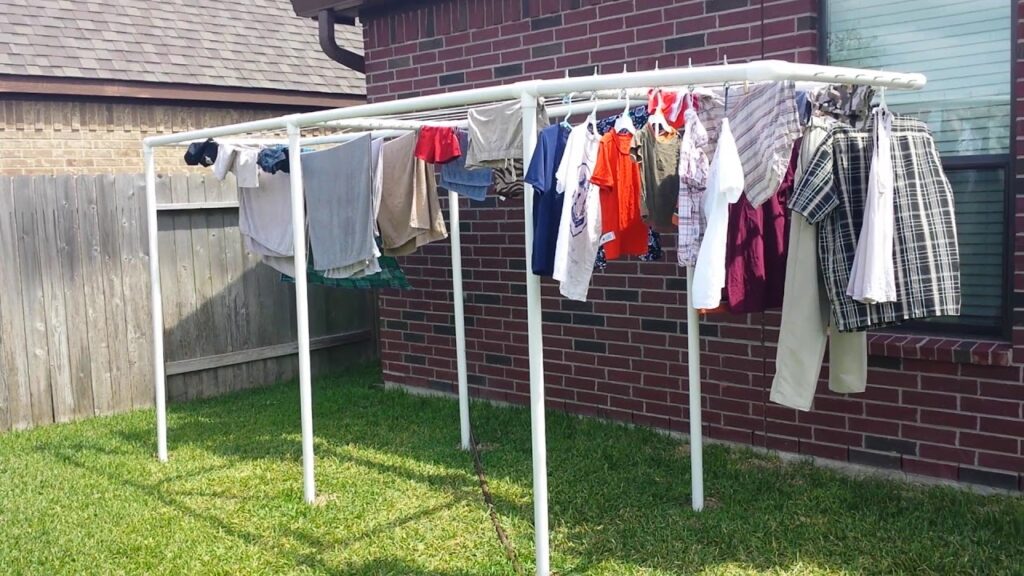
The fastest fix is fresh air. Hang the clothes outside on a dry, breezy day for 3 to 6 hours. Moving air carries off odor compounds much faster than a closed closet, and UV light is hard on mold and bacteria at the fabric surface.
Turn dark and bright clothes inside out. Keep silk and wool out of strong direct sun for more than an hour or two, because UV fades dye and weakens those fibers. Leave space between items so air can move around each one.
If you don’t have a yard, put a drying rack near an open window and point a fan at it. That works almost as well. Don’t air clothes on a humid or rainy day, because damp air slows the process and can make the smell worse.
Does a vodka or vinegar spray work on musty clothes?
Yes. A vodka spray works well, and a diluted vinegar spray works nearly as well if you can tolerate a vinegar smell for an hour. Alcohol evaporates fast and takes odor compounds with it, and it also kills some of the bacteria that cause the smell.
Put the cheapest plain, unflavored vodka you can find in a fine-mist spray bottle. Mist the armpits, the collar, and any spot that smells strongest until the fabric is damp but not soaked. Then hang the piece to dry where air is moving.
For vinegar, mix 1 part white vinegar with 1 part water. The acid breaks down many odor compounds, and the vinegar smell goes away as the fabric dries. Before you use either spray, test it on an inside seam, and take extra care with silk and anything labeled dry clean only.
Store-bought fabric refresher sprays that contain cyclodextrin trap odor molecules and can handle a faint smell. They do nothing, though, for fabric that is still damp inside.
Can baking soda or charcoal pull the smell out?
Yes. Baking soda and activated charcoal absorb odors slowly, so they make a good last step after you air the clothes. Put the clothes in a large bag or a bin with a lid, along with an open box of baking soda or a few charcoal pouches, and close it for 24 to 48 hours.
Keep the baking soda box upright so the powder stays off the clothes. Charcoal pouches are reusable. Put them in the sun for a few hours to refresh them.
On sturdy cotton or denim, you can also sprinkle baking soda directly on the fabric, leave it overnight, and then shake and brush it off outside. Don’t do this on dark wool or knits. The powder gets into the fibers and leaves a white haze.
Will a garment steamer or the dryer help?
A garment steamer helps, especially on sweaters, coats, and dry-clean-only pieces that you can’t spray freely. Hot steam loosens odor compounds and removes storage creases at the same time. Steam also adds moisture, though, so the piece must dry completely in open air before it goes back in the closet.
The dryer can help too, with no water or detergent. Run cotton and synthetics on low heat or air fluff for 15 to 20 minutes with a clean, dry towel in the drum. Use the no-heat setting for wool so it doesn’t shrink.
A dryer sheet adds scent on top of the fabric. That is fine for a faint smell, but it only covers up a real mildew problem.
CHI Handheld Garment Steamer

This is a good fit if most of your stored clothes are sweaters, blazers, and dry-clean-only pieces that don’t do well with sprays. It works as a handheld steamer and as a steam iron, and it folds small enough to keep in a closet. Steam each piece, then leave it in open air until it is completely dry.
- Works as a handheld garment steamer and a steam iron
- Collapsible design folds small for closet or travel storage
How do you treat musty sweaters and dry-clean-only pieces?
Wool sweaters are the easiest case, because wool gives up odors well with air and time. Lay them flat on a rack in a breezy, shady spot for a day, because hanging knits stretches them. If some smell is left, steam them lightly and leave them overnight in a bag with baking soda.
Treat cashmere and dry-clean-only jackets the same way. If you want to use a spray, test it on a hidden spot first. If a lined wool coat still smells after two rounds of airing, the lining has probably trapped moisture, and it’s time for the dry cleaner.
While the sweaters are out, look for small holes or loose threads at the cuffs and collar. Moths like dark, still storage as much as mildew does.
When is washing the only real fix?
Wash the clothes, or take them to a cleaner, if you see spots, if the fabric feels damp or stiff, or if the smell returns within a day of airing. Black, gray, or green specks and fuzzy patches are mildew colonies. Airing and sprays cut the smell for a few hours, but the growth stays in the fibers and the odor comes back.
Before those clothes go in the washer, make sure the washer isn’t part of the problem. A musty front loader passes its smell right back to the clothes, so start with our steps for cleaning a moldy front load washer gasket. For mildewed items, the usual fix is the hottest wash the care label allows, with about a cup of white vinegar in the rinse.
If you have mold allergies or asthma, shake out and handle mildewed clothes outside. A basic mask is a sensible precaution.
How do you store clothes so they don’t smell musty next year?
Store clothes clean and completely dry, in breathable containers, in a room with low humidity. The EPA recommends keeping indoor humidity below 60 percent, and ideally between 30 and 50 percent. Clothes that are only “clean enough” still carry body oils and food traces that feed mold, so wash everything before you pack it away.
Use cotton garment bags, or plastic bins with a little airflow, and add a few silica gel packets to each bin. Don’t store clothes in cardboard boxes or directly on a basement floor. Cedar blocks help with moths but do little against moisture.
A cold closet wall collects the same moisture that fogs windows on fall mornings. Our guide to stopping condensation on the inside of windows explains how to bring that humidity down. The same rules apply to any fabric you pack away for months, as in our steps for storing patio cushions for the winter.
Frequently asked questions
Does putting clothes in the freezer get rid of a musty smell?
Not reliably. Freezing can reduce some odor-causing bacteria, but mold spores survive the cold, and the smell often returns once the fabric warms up. Airing and a vodka spray work better for less effort.
How long does it take to air out musty clothes?
A faint storage smell usually goes away after 3 to 6 hours outside on a dry, breezy day. A stronger smell can take two days of airing plus a night in a bag with baking soda. If it hasn’t improved by then, wash the item.
Does this work on musty thrift store clothes?
It works on a faint closet smell. Thrift store clothes also carry other people’s body oils, detergent, and sometimes perfume, though. Airing and a vodka spray are a good first step for dry-clean-only finds, but wash anything washable before you wear it.
Is it safe to wear clothes that smell musty?
A faint storage smell is mostly just unpleasant. Clothes with visible mildew can irritate the skin and trigger symptoms in people with mold allergies or asthma. Clean those clothes before anyone wears them.
Start with the free fix: a dry day, a clothesline or an open window, and a few hours. Most sweaters and jackets that spent the summer in a bin need nothing more, and a bottle of vodka and a box of baking soda take care of the rest.
Save the washer for pieces with spots or a smell that keeps coming back. Next spring, put everything back into storage clean and dry. If you need new bins or a dehumidifier before then, check our current home deals.