

Key takeaways
- Yes, you can usually still remove it. A sunscreen stain that survived the wash is almost always oil that the detergent did not lift, and oil is still removable on the second try.
- Keep the garment out of the dryer. Heat is what turns a fixable greasy mark into a permanent one.
- Degrease first: work liquid dish soap or a heavy-duty liquid detergent directly into the dry stain, let it sit 15 to 30 minutes, then wash in the hottest water the care label allows.
- If the stain is orange or rust colored, soap alone will not touch it. That is avobenzone reacting with iron in your water, and it needs an acid-based rust remover, not chlorine bleach.
- Chlorine bleach makes rust-orange sunscreen stains worse. Oxygen bleach is the safe soak.
- Updated July 13, 2026.
What’s in this guide
- Can you still get a sunscreen stain out of clothes after washing?
- Why does the sunscreen stain only show up after the wash?
- What removes sunscreen stains from clothes after washing?
- Why is the stain orange, and what gets rust-colored sunscreen out?
- Does the method change for white shirts, swimsuits, and delicates?
- What does not work on sunscreen stains?
- How do you keep sunscreen off clothes in the first place?
- Frequently asked questions
Can you still get a sunscreen stain out of clothes after washing?
Usually, yes. A wash cycle does not seal a sunscreen stain in place, it just fails to remove it, and the mark you are looking at is the same oil and mineral residue that was there before. The thing that makes stains permanent is dryer heat, not water.
So the first question is not what to buy. It is whether the shirt went through the dryer, and how many times.
One trip through the dryer and you can still win most of the time, it just takes a longer soak. Several cycles of wash and dry, and the odds drop, though rust-orange sunscreen marks respond to acid treatment even when they look baked in. Air dry from here on out and check the fabric each time before you commit it to heat.
Why does the sunscreen stain only show up after the wash?
Because two different stains are hiding in one smear, and the wash only removes one of them. Sunscreen is oil plus UV filters suspended in emollients, and standard detergent at warm water temperature lifts some of the oil but leaves the rest sitting in the fibers.
The greasy part turns into a dull yellow shadow once the fabric dries and the water is gone. That is why the collar looked fine going in and looked grubby coming out.
The second stain is chemical. Avobenzone, the most common UVA filter in American sunscreens, reacts with iron and other minerals in tap water and produces a rust-orange discoloration. Wash the shirt in hard water and you are not diluting the problem, you are feeding it.
What removes sunscreen stains from clothes after washing?
Degrease the stain before it goes anywhere near water again. This is the whole method, and everything else is a variation on it.
Work through it in order:
- Lay the garment flat and dry. Do not wet the stain, water spreads the oil and gives the surfactant less to grab.
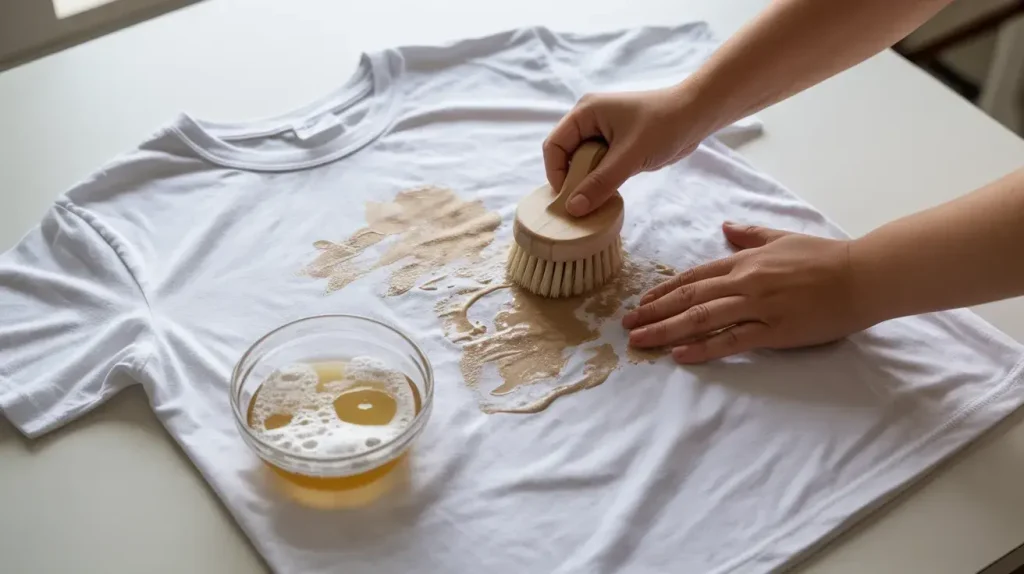
- Apply liquid dish soap or a heavy-duty liquid laundry detergent straight onto the mark, enough to saturate it. Dish soap is built to strip grease off dishes, which is precisely the job here.
- Rub it in with your fingers or a soft toothbrush, gently, following the weave rather than scrubbing in circles.
- Let it sit 15 to 30 minutes. On an old set-in stain, give it a couple of hours.
- Wash on the hottest cycle the care label allows, with your usual detergent. Heat helps here because the fabric is wet and the surfactant is working. Heat only hurts once the garment is drying.
- Air dry and inspect in daylight. If a shadow remains, repeat before you even think about the dryer.
If the oil is gone but the fabric still looks dingy, soak it in oxygen bleach and warm water for four to eight hours, then rewash. That handles the yellowing that dish soap leaves behind.
Why is the stain orange, and what gets rust-colored sunscreen out?
Orange means iron, and iron needs acid. Avobenzone breaks down in the wash and bonds with iron already dissolved in your water supply, which produces the same rust color you would get from a leaky pipe.
Soap will not remove it because there is no grease left to lift. You need a rust remover, an oxalic or citric acid product sold in the laundry aisle, or a stain remover formulated specifically for rust.
Apply it to the dry stain, follow the label timing exactly, and rinse thoroughly. These products work fast and they are not gentle, so do not leave them sitting on the fabric while you go make coffee. Rinse, then run a normal wash to get the acid residue out.
The one rule you cannot break: no chlorine bleach on an orange sunscreen stain. Bleach oxidizes the iron further and locks the color in. It is the single most common way people turn a fixable shirt into a rag, and it is worth knowing before you reach for the jug.
Does the method change for white shirts, swimsuits, and delicates?
Yes, mainly around temperature and what chemicals you can use. The degrease-first principle holds everywhere, but hot water and aggressive acids will wreck some of the fabrics sunscreen tends to land on.
White cotton is the easy case. Degrease, wash hot, then soak in oxygen bleach if any yellow remains. Chlorine bleach is still a bad idea if there is any orange tint at all.
Swimsuits and athletic fabrics are the hard case. Spandex and elastane degrade in hot water and dissolve in chlorine bleach, so use cool or lukewarm water, a small amount of dish soap, and patience. Rinse the suit in fresh water right after you get out of the pool or ocean, before the sunscreen and chlorine have hours to sit and set.
For silk, wool, and anything labeled dry clean only, stop and take it in. Point out the stain and say it is sunscreen, because oil-based stains and rust need different treatments and the cleaner will pick the right one. Guessing with a home remedy on silk costs more than the cleaning does.
What does not work on sunscreen stains?
The dryer is the enemy, and steam is a close second. Any heat applied to a dry, oily stain sets it, which is why a steam cleaner is the right tool for a lot of household messes and exactly the wrong one here. Save it for upholstery and floors, where a handheld steam cleaner earns its space in the closet.
Chlorine bleach, as covered, makes orange stains permanent. It also weakens the fibers of anything you use it on repeatedly.
Hard scrubbing pushes the oil deeper into the weave and roughs up the surface, which makes the spot look worse even after the stain is gone. Cold-water-only washing is another loser, since cold water does very little to a greasy stain. And skipping the pretreat because your detergent says it is a stain fighter almost never works on sunscreen.
One more: an old bar of soap or a general-purpose spray is not a degreaser. If the label does not talk about grease or oil, it is not going to help you here.
How do you keep sunscreen off clothes in the first place?
Let it dry before you get dressed. Most sunscreens need 10 to 15 minutes to absorb, and that window is when everything gets on collars, waistbands, and car seats. Apply, wait, then put the shirt on.
Switch what you use on your face and neck if the collar of every shirt you own has a shadow on it. Mineral sunscreens based on zinc oxide or titanium dioxide contain no avobenzone, so they will not produce that rust-orange reaction with your water, though they can still leave a white or greasy mark that needs the same degreasing treatment.
Rinse hands after applying, keep a towel over the car seat headrest on beach days, and pretreat anything that got a visible smear as soon as you get home rather than at the end of the week. Sunscreen stains are far easier to remove the same day than the same month.
If you are stocking up on hot-weather gear this month anyway, the same trip is a good moment to grab a rechargeable fan for the beach bag and check what is worth buying across the current deals hub. Summer laundry problems tend to arrive in batches, and so do the fixes.
Frequently asked questions
Can a sunscreen stain be removed after it has been washed and dried?
Often, yes, especially if it has only been through the dryer once. Treat it as a fresh stain: saturate it with dish soap, let it sit for an hour or more, and wash in the hottest water the fabric allows. Air dry and repeat before applying any more heat, because each dryer cycle makes the oil harder to lift.
Why did my white shirt turn orange after washing out sunscreen?
Avobenzone, a common UVA filter, reacts with iron dissolved in tap water and creates a rust-colored stain. It is a chemical reaction, not leftover grease, so detergent will not touch it. Use an acid-based rust remover from the laundry aisle and avoid chlorine bleach, which sets the rust color permanently.
Does vinegar or baking soda remove sunscreen stains?
Baking soda can absorb some surface oil from a fresh stain if you leave it on for an hour and brush it off, but it will not clear a stain that has already been through the wash. Vinegar is too weak an acid to do much on rust-orange marks. Dish soap for the grease and a proper rust remover for the orange will do more in less time than either pantry fix.
How do I get sunscreen out of a swimsuit without ruining the fabric?
Use cool or lukewarm water and a small amount of dish soap worked in gently, then rinse well. Skip hot water and chlorine bleach, both of which break down the elastane that gives the suit its stretch. Rinsing the suit in fresh water immediately after swimming prevents most of the problem.
Will an oxygen bleach soak fix the yellow shadow left behind?
Usually. Once the oil is degreased out, a four to eight hour soak in oxygen bleach and warm water clears the residual yellowing on whites and most colorfast fabrics. Do the degreasing step first, because oxygen bleach on top of untreated oil accomplishes very little.
The short version
Sunscreen stains are two problems wearing one costume: an oil stain and, if avobenzone met iron in your water, a rust stain. Dish soap handles the first, an acid-based rust remover handles the second, and the dryer ruins your chances at either. Nothing here requires a special gadget, which is the honest answer even when it is not the exciting one, the same way clearing a stubborn smell out of a lunch box comes down to basics rather than a product.
Keep the shirt out of the heat until it looks right in daylight. It is the cheapest step, it costs you nothing but a day on a drying rack, and it is the one people skip.