

Quick answer
- Most inside leaks are a drainage problem, not a dead air conditioner.
- A window unit should tilt slightly down toward the outside so condensation runs out the back, not the front.
- A clogged drain channel or a dirty filter that freezes the coils will send water dripping into the room.
- The common fixes cost nothing: re-level the unit, clean the filter, and clear the drain hole.
- Call a pro only if the coils keep icing up after a good cleaning, which usually points to low refrigerant.
Your window air conditioner leaks water inside because the condensation it produces isn’t draining out the back the way it’s built to. Nine times out of ten that means the unit is tilted slightly forward into the room, the drain channel is blocked, or the coils froze and are now melting faster than the pan can handle.
None of those require a new AC. Below is how to tell which one you’re dealing with, and the order to check them in.
What this guide covers
- Is it normal for a window AC to make water?
- Is your window unit tilted the wrong way?
- Is the drain hole or channel clogged?
- Why do the coils freeze and then drip inside?
- Could a dirty filter be causing the leak?
- How do you stop a window AC from leaking water inside?
- When should you call a professional?
- Frequently asked questions
Is it normal for a window AC to make water?
Yes. A window air conditioner makes water on purpose, and a healthy amount of it. Warm, humid room air passes over a cold evaporator coil, the moisture in that air condenses on the metal, and it drips down into a shallow pan in the base of the unit.
From there it’s supposed to run outside and drip off the back. Many units even fling that water onto the outdoor condenser coil to run more efficiently, which is why you sometimes hear a faint sloshing or ticking. Water showing up on your floor or windowsill means that outdoor path failed somewhere.
So the water itself isn’t a defect. The direction it’s traveling is the problem, the same way a healthy system going slightly wrong is behind that vinegar smell some car air conditioners develop.
Is your window unit tilted the wrong way?
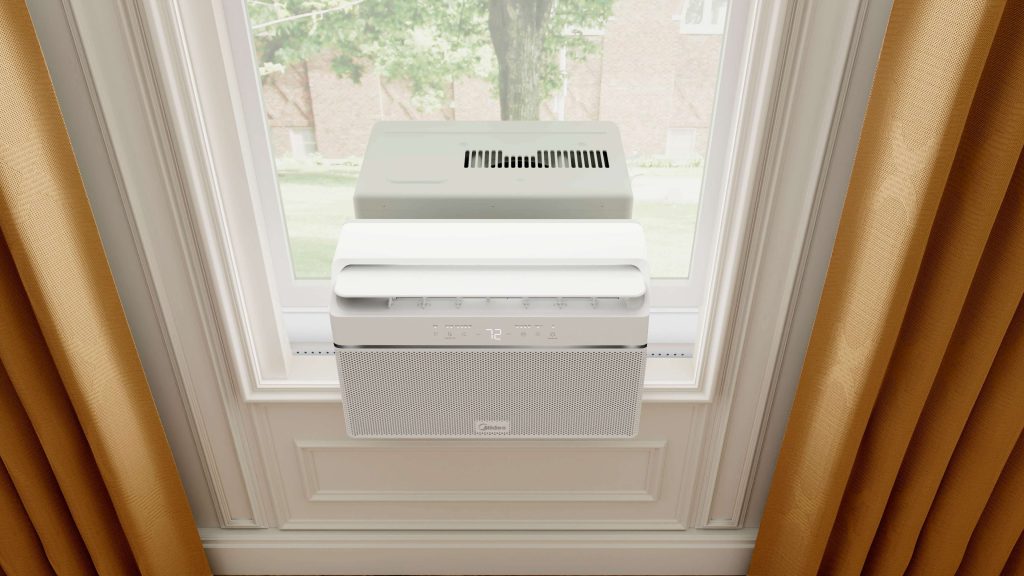
This is the most common reason a window AC leaks inside, and the easiest to fix. The unit should sit with the back end about a quarter inch lower than the front, so gravity pulls the collected condensation toward the outdoor drain.
If it’s dead level or tipped toward the room, water pools at the front of the base pan and spills over the inside lip. Set a small level on top of the cabinet to check. A unit that was installed in a hurry, or one that has sagged over a season, often ends up tilted forward.
To correct it, loosen the mounting brackets and lower the outside edge slightly, or slip a thin shim under the front interior rail. Small adjustment, big difference.
Is the drain hole or channel clogged?
A blocked drain is the second usual suspect. There’s a small weep hole or channel in the base pan that lets water escape outside, and over a summer it clogs with dust, dead bugs, algae, and slimy mold.
When that hole plugs up, the pan fills past its edge and overflows into the room, even if the tilt is perfect. Unplug the unit, find the drain point at the back or underside of the base, and clear it with a pipe cleaner, a zip tie, or a short burst of compressed air.
While you’re in there, wipe out any standing gunk in the pan. A little buildup grows fast in a warm, damp box, and a handheld steam cleaner makes quick work of the grime around the coils and pan if you have one.
Why do the coils freeze and then drip inside?
Coils freeze when the evaporator gets colder than 32 degrees, and the ice that forms eventually melts into more water than the drain can move. You’ll often see a sheet of frost on the coils, weak airflow, and a puddle that appears after you turn the unit off.
The usual triggers are restricted airflow, running the AC when it’s cool outside, and low refrigerant. Anything that starves the coil of warm air passing over it drops the surface below freezing, and moisture that would have dripped away turns to ice instead.
The immediate fix is to shut the unit off, switch it to fan only, and let the ice thaw completely for an hour or two. Then find out why it iced up, because it will happen again if you don’t.
Could a dirty filter be causing the leak?
A clogged filter is one of the top causes of frozen coils, so yes, it can absolutely lead to an inside leak. When the filter is packed with dust, not enough room air reaches the coil, the coil temperature falls, and frost builds up until it melts and overflows.
Pop the front grille, pull the filter, and rinse it under the tap if it’s the washable mesh kind. Let it dry fully before sliding it back in.
Get in the habit of cleaning it every two to four weeks during heavy summer use. It’s the single cheapest thing you can do to keep the unit draining correctly, and it helps the room air feel cleaner too, in the same spirit as running a capable air purifier in a big room.
How do you stop a window AC from leaking water inside?
Work through the causes in order, from easiest to hardest, and you’ll solve most leaks without spending a dollar. Turn the unit off and unplug it before you touch anything internal.
- Check the tilt with a level and lower the outside edge a hair if needed.
- Remove and clean the air filter, then let it dry.
- Clear the drain hole and channel at the back of the base pan.
- Wipe out standing water and mold from the pan.
- Gently straighten any bent coil fins so air moves freely.
- Check the foam side panels and window seal so warm, humid outside air isn’t sneaking in and condensing.
Give it a full day after cleaning before you decide it’s fixed. If ice was involved, the coils need time to fully thaw and the pan needs to drain down.
When should you call a professional?
Call a technician when the coils keep freezing after you’ve cleaned the filter and confirmed good airflow, because that pattern usually means the refrigerant is low. Refrigerant is a sealed system, so a unit that’s low has a leak somewhere, and topping it up is a licensed job, not a DIY one.
Also get help if the base pan is cracked, the leak followed a loud grinding noise, or water has already reached an outlet or power strip. Standing water plus electricity is where a cheap problem turns into a dangerous one.
For an older unit that leaks, ices, and struggles every season, replacement often beats repair. If you’re weighing that, browse our home and cooling picks to compare current options before another heat wave hits.
Frequently asked questions
Is a leaking window air conditioner dangerous?
The water itself is just condensation, so a small drip onto a windowsill is mostly a nuisance and a mold risk. It becomes dangerous if that water reaches an outlet, cord, or power strip, so unplug the unit and dry the area before troubleshooting. Long-term dampness inside the wall or trim can also grow mold, which is worth cleaning up promptly.
How much should a window AC tilt toward the outside?
About a quarter inch lower at the back than the front is the general target for most units. That slight slope lets condensation drain out the rear instead of pooling at the inside lip. Check your model’s manual, since a few newer designs are built to sit level and drain differently.
Why does my window AC only leak on very humid days?
Humid air holds more moisture, so the coil pulls far more water out of it, which can overwhelm a drain that’s already partly clogged or a pan that’s slightly mis-tilted. A unit that stays dry on mild days but drips during muggy stretches almost always has a marginal drainage issue, not a broken part. Clearing the drain hole usually solves it.
Should I put a towel under my AC as a fix?
A towel or shallow tray is fine as a short-term catch while you diagnose the real cause, but it doesn’t fix anything. Water sitting against the unit or wall still invites mold and can damage the sill. Treat it as a stopgap for a day or two, not a solution.
Can I stay cool while I sort out the leak?
Yes. A shut-off period to thaw and clean the unit is a good moment to lean on a rechargeable portable fan and to swap in a cooling pillowcase for the night. Neither replaces the AC, but they take the edge off while the coils dry out.
The takeaway: water on your floor is almost never a sign that the air conditioner is finished. It’s telling you the condensation lost its path outside, and that path is short and fixable, usually tilt, a clogged drain, or a filter that let the coils freeze.
Work through those three this week, before the next hot stretch, and you’ll likely have the unit draining out the back where it belongs. If it keeps icing after a thorough clean, that’s your cue to bring in a tech rather than keep chasing it.