


Quick answer
- Wet leaf stains are tannins. These are the same plant compounds that turn tea brown, and they soak into porous concrete.
- To remove most fresh stains, mix oxygen bleach in warm water, let it soak for 10 to 15 minutes, and scrub with a stiff nylon brush.
- A pressure washer speeds up the rinse, but on its own it rarely removes a set-in stain. Use the 25 or 40 degree tip, never the 0 degree.
- Dark, old stains may need a second round or an oxalic acid cleaner. Faint stains often fade in sunlight over a few weeks.
- The cheapest fix is to clear leaves off before they sit wet for days.
Updated October 23, 2026
The fastest way to get wet leaf stains off concrete is oxygen bleach. Mix it in warm water, pour it on the stain, wait 10 to 15 minutes, scrub with a stiff brush, and rinse.
You don’t need a special leaf stain remover or a new pressure washer for this. If your problem is a patio, we answered the patio version of the question in whether you can get leaf stains off a concrete patio. This post covers the method for any slab, including driveways, sidewalks and steps.
Why do wet leaves stain concrete?
Wet leaves release tannins, and concrete soaks them up. Concrete is porous, so a leaf that stays wet for a few days lets its dye sink below the surface.
That’s why a hose alone rarely works. The color isn’t dirt sitting on top. It’s pigment in the top layer of the slab.
Oak leaves have a lot of tannin and cause many of these stains, though maples and other trees stain too. The classic sign is a sharp, leaf-shaped brown outline where one leaf lay flat through a rainy week.
What removes leaf stains from concrete?
Try oxygen bleach first. It’s sodium percarbonate, a powder that releases hydrogen peroxide in water, and the peroxide breaks down tannin. It doesn’t have the fumes of chlorine bleach, and it’s much less likely to hurt your plants.
Here’s how the common options compare:
- Oxygen bleach powder is the best first choice for most stains. It’s cheap, it’s often sold in the laundry aisle, and one tub covers a lot of concrete.
- Drugstore 3% hydrogen peroxide is fine for one or two small spots. Pour it on, let it fizz, then scrub and rinse.
- Diluted chlorine bleach also works, but it’s harder on the grass and plants at the edges. Never mix it with ammonia or vinegar.
- Oxalic acid cleaners, often sold as deck or wood brighteners, are the next step for stubborn stains. Decks get these same tannin stains, which is why the products are made for wood.
- Dish soap and water won’t do much. Soap removes grime, not pigment.
How do you get wet leaf stains off concrete, step by step?
Clear the area, wet the slab, apply oxygen bleach, let it soak, scrub, and rinse. Plan on about half an hour for a single stained section of walkway.
- Sweep away leaves and debris, then wet the concrete with a hose. Wetting it first slows down how fast the cleaner soaks in and dries.
- Mix oxygen bleach in warm water at the strongest ratio on the label. Mix only what you’ll use soon, because the solution loses strength after a few hours.
- Pour or spray it over the stain and keep it wet for 10 to 15 minutes. On a sunny or windy day, mist it again so it doesn’t dry out.
- Scrub with a stiff nylon brush or a long-handled deck brush. Skip steel wire brushes, which can scratch the surface and leave rust specks.
- Rinse well with a hose or pressure washer.
- Let the concrete dry completely before you judge the result. Wet concrete looks darker, so a stain can look worse than it really is until it dries.
Do you need a pressure washer for leaf stains?
No, but a pressure washer makes the rinse faster and saves your back on a long driveway. On its own, pressure usually lightens a tannin stain without removing it, because the pigment is inside the pores.
If you use one, choose the 25 degree (green) or 40 degree (white) tip and hold the wand about a foot from the surface. The 0 degree (red) tip and turbo nozzles hit hard enough to etch concrete and leave permanent stripes, especially on older slabs.
For sidewalks and a normal driveway, an electric washer in the 1,500 to 2,000 PSI range is enough to rinse after the oxygen bleach. Bigger electric units around 3,000 PSI mostly save time on large areas.
Sun Joe SPX100-GO Electric Pressure Washer

This is a compact electric washer for someone who wants help with the rinse, not a big project machine. It has interchangeable nozzles, so you can use a wide tip that’s safe for concrete. The onboard detergent tank and foam cannon are handy for other jobs around the house.
- 13-amp electric motor
- 4 interchangeable nozzles
- Foam cannon and onboard detergent tank
Greenworks 3000 PSI Brushless Pressure Washer

Greenworks Universal Pressure Washer Nozzle Tips
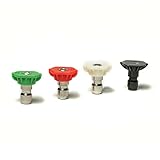
If you already own a pressure washer but lost the wide tips, buy this set instead of a new machine. These universal quick-connect tips give you back the 25 and 40 degree options, which are the ones to use on concrete.
- 4-pack of replacement tips
- Universal quick-connect fit
- Includes wide-angle tips for concrete
What if the stain won’t come out?
Do a second round of oxygen bleach first, because dark stains often take two or three passes. If the stain stops getting lighter, try an oxalic acid deck brightener next.
Follow the brightener’s label exactly and wear gloves and eye protection. Rinse well, because acid left on concrete can dull the surface.
There’s also a free option. Sunlight breaks down tannin, so faint stains on a sunny slab often fade on their own over several weeks to a few months. If the mark is light and doesn’t bother you, waiting costs nothing.
How do you keep leaves from staining concrete again?
Clear leaves off the concrete before they sit wet for more than a day or two. During peak leaf drop, a weekly pass with a rake or blower prevents most stains.
The leaves you clear don’t have to go into bags. We looked at mulching leaves with a regular push mower, which turns them into lawn food instead of trash.
Look at your sprinklers too. If they still run in fall and spray onto the walkway, they keep leaf piles soaked, and a misaligned head is usually a cheap fix (see our Rain Bird sprinkler parts roundup).
A penetrating concrete sealer also limits how deep tannin can soak in. Apply it to clean, dry concrete, and reapply on the schedule printed on the label.
Frequently asked questions
Will leaf stains on concrete fade on their own?
Often, yes. Sunlight and rain break down tannin over several weeks to a few months, and they work faster on slabs that get full sun. Stains in shade and very dark stains can last much longer.
Does vinegar remove leaf stains from concrete?
Not well. Vinegar is a weak acid that does little to tannin, and repeated use can etch the surface of the concrete. Oxygen bleach is the better choice.
Is chlorine bleach safe to use on concrete?
Diluted chlorine bleach won’t damage the concrete, but it can harm grass and plants along the edges, and it gives off fumes. Never mix it with ammonia or acids, and rinse well afterward. Oxygen bleach does the same job with less risk.
Is oxygen bleach safe around plants and pets?
It’s much gentler than chlorine bleach, because sodium percarbonate breaks down into water, oxygen and soda ash. Rinse the area well and keep pets off it until it dries.
Can I clean concrete when it’s cold out?
Wait for a day above freezing with no freeze in the overnight forecast. Water left in the pores can freeze and expand, and over time that can flake the surface. If cold weather has already arrived, the stain can wait until spring.
Start with the cheap fix. A tub of oxygen bleach and a stiff brush remove most wet leaf stains, and a pressure washer only makes the rinse faster. If a faint stain is left after two rounds, the sun will probably fade the rest.
If you’re already buying fall yard gear, our deals hub has the current outdoor markdowns in one place. Rake before the next rain and you probably won’t need to do this again.