

Key Takeaways
- Yes, a regular push mower can mulch leaves. You don’t need a mulching mower, a special blade, or a leaf shredder.
- Mow when the leaves are dry and set the deck to its highest setting. Plan on two passes, sometimes three.
- You’re done when the pieces are about the size of a dime and you can see grass between them.
- If the leaves are more than a few inches deep, bag or rake part of them first and mulch the rest.
- A reel mower can’t do this job. It pushes leaves over instead of cutting them.
Yes, you can mulch leaves with a regular push mower, and in most yards it’s the cheapest and easiest way to handle fall leaves. A normal rotary mower with a standard blade shreds dry leaves into small pieces that fall down between the grass blades and break down over the winter.
You don’t need to buy anything to do this. The work is in the technique: dry leaves, a high deck, a sharp blade, and enough passes. Updated September 2026, just as the first leaves start coming down.
In this guide
- Does a regular push mower really mulch leaves?
- Is mulching leaves good for your lawn?
- How do you mulch leaves with a regular mower?
- Should the bag or side chute be on or off?
- How many leaves is too many to mulch?
- What about reel mowers and riding mowers?
- Do you need a new mower for this?
- Frequently asked questions
Does a regular push mower really mulch leaves?
Yes. Any rotary push mower cuts leaves the same way it cuts grass: the spinning blade chops whatever it hits, and dry leaves break easily. A “mulching mower” only has a deck and blade shaped to keep clippings inside longer, so it cuts them into smaller pieces on each pass.
With a standard mower you get the same result, but you need one more pass. That’s all the difference is. Gas, corded, or battery doesn’t matter, as long as the blade spins fast enough to cut grass cleanly.
Is mulching leaves good for your lawn?
Mulching leaves is good for the lawn when the pieces are small enough to settle down to the soil. Turfgrass researchers at Michigan State University mulched heavy leaf layers into lawns for several seasons and found no harm to the grass. They also found fewer dandelions in the mulched plots.
Shredded leaves break down over the winter and put a small amount of organic matter back into the soil. Soil microbes and earthworms do most of that work. It won’t take the place of fertilizer, but it’s free material that you would otherwise put into bags at the curb.
A whole-leaf mat is a different story. Leaves you don’t mow stay wet, block light, and can smother grass or encourage snow mold under winter snow. Mulching fixes that, because small pieces fall through the grass.
How do you mulch leaves with a regular mower?
Mow dry leaves at the highest deck setting, make two passes in different directions, and check the result. Here is the full process.
- Wait for a dry afternoon. Wet leaves clump, clog the deck, and leave soggy piles behind.
- Walk the yard first and pick up sticks, walnuts, pinecones, and dog toys. The blade throws them hard.
- Raise the deck to its highest setting, often around 3.5 to 4 inches. This gives the leaves room to lift and circulate under the deck.
- Mow your normal pattern at a slower walking speed than usual.
- Make a second pass at a right angle to the first. For thick oak leaves, you may need a third.
- Stop when the pieces are about dime-sized and you can see grass through them.
A sharp blade makes a big difference here. A dull blade tears leaves into large, ragged pieces and makes you do extra passes. If you haven’t sharpened yours since spring, do it before leaf season.
Maple, birch, and other thin leaves shred fast. Oak leaves are thick and waxy, so give them the extra pass and keep them dry.
Should the bag or side chute be on or off?
For mulching, take the bag off and close the rear opening with the mulching plug if your mower came with one. This keeps leaves under the deck longer, so the blade hits them more times.
If your mower only side-discharges, that works too. Mow so the chute throws leaves toward the part of the lawn you haven’t cut yet, and the next pass will chop them again.
Keep the bag if you want some leaves for other uses. Shredded leaves that you bag are very good mulch for a vegetable patch or a raised garden bed, and they break down much faster than whole leaves in a compost pile.
How many leaves is too many to mulch?
If you can’t see any grass under the leaves, or the layer is deeper than a few inches, a push mower will struggle. The deck clogs, the engine or motor bogs down, and the shredded layer stays too thick to settle.
The fix is to mow more often during peak drop instead of waiting for all the leaves to fall. One session a week in October is much easier than one big session in November. Under a large tree, you can also rake or blow part of the pile into beds, then mulch what’s left on the grass.
After you mulch, check that no damp mats are left, especially along fences and under shrubs. A cordless string trimmer can clean up the edges where the mower deck can’t reach.
What about reel mowers and riding mowers?
A reel mower can’t mulch leaves. Its blades cut with a scissor action close to the ground, so leaves get pushed over or jam the reel. If a reel mower is all you have, rake the leaves and shred them another way.
Riding mowers and lawn tractors mulch leaves the same way push mowers do, and they’re faster on large lawns. Use the same rules: dry leaves, a high deck, and a second pass.
Do you need a new mower for this?
No. If your mower cuts grass well, it will mulch leaves. A mulching blade for a push mower is inexpensive and saves you a pass, but it’s optional. A sharp standard blade does the job.
The only time to shop is when your mower is already failing, or when you’re changing to battery power anyway. In that case, get a 3-in-1 deck (bag, mulch, side discharge) so you have all the options in fall. You can browse current yard tool prices on our deals page.
PowerSmart 21" Self-Propelled Gas Mower
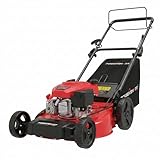
This gas mower is for someone whose old mower is dying and who has a medium yard with a lot of trees. It has a 3-in-1 deck with a mulch setting, six height positions, and rear-wheel drive, which helps on slopes with wet leaf patches. Pick it for the deck options, not for leaf season alone.
- 3-in-1 bag, mulch, and side discharge
- 6 cutting heights
- Rear-wheel drive for slopes
Greenworks 80V Mower and Leaf Blower Kit

This is for households that want to change to battery tools and need to move leaves out of beds and corners onto the lawn before they mulch. The blower and the mower use the same battery, so you have one charger and no gas can. If you only need the mower, the combo kit isn’t worth it.
- 21-inch brushless self-propelled mower
- 580 CFM axial leaf blower
- 4.0Ah battery shared between both tools
One more fall job: if you plan to fertilize, do it after the leaves are mulched so the product reaches the soil. If you have dogs, read our notes on pet-safe weed and feed before you buy. Also drain and winterize the irrigation before the first hard freeze, and keep a few replacement sprinkler parts ready in case the mower hits a sprinkler head hidden under the leaves.
Frequently asked questions
Can you mulch leaves with a regular push mower without a mulching blade?
Yes. A sharp standard blade shreds dry leaves fine. Plan on one more pass than a mulching blade would need, and stop when the pieces are about dime-sized.
Can you mulch wet leaves with a push mower?
It’s possible, but the results are poor. Wet leaves stick together, clog the deck, and leave clumps that can smother grass. Wait for a dry afternoon if you can.
Will mulched leaves kill my grass?
Not if the pieces are small and you can see grass through them. Michigan State University turf research found no harm to lawns from mulched leaves. Whole, matted leaves are the problem, not shredded ones.
How often should you mulch leaves in the fall?
Once a week during peak leaf drop works for most yards. If you mow often, the layer stays thin enough for a push mower to handle in one or two passes.
Can you mulch leaves with a reel mower?
No. Reel mowers cut with a scissor action close to the ground and push leaves over instead of chopping them. Rake the leaves and shred them another way.
So skip the leaf vacuum and the paper yard bags this year. Sharpen the blade, raise the deck, and mow the leaves on a dry day, once a week while they’re falling.
Leave the shredded pieces where they land, and next spring you’ll have fewer bags at the curb and a lawn that’s no worse for it. If an oak drops more than your mower can handle, bag that part and put it in your garden beds.