

The short answer
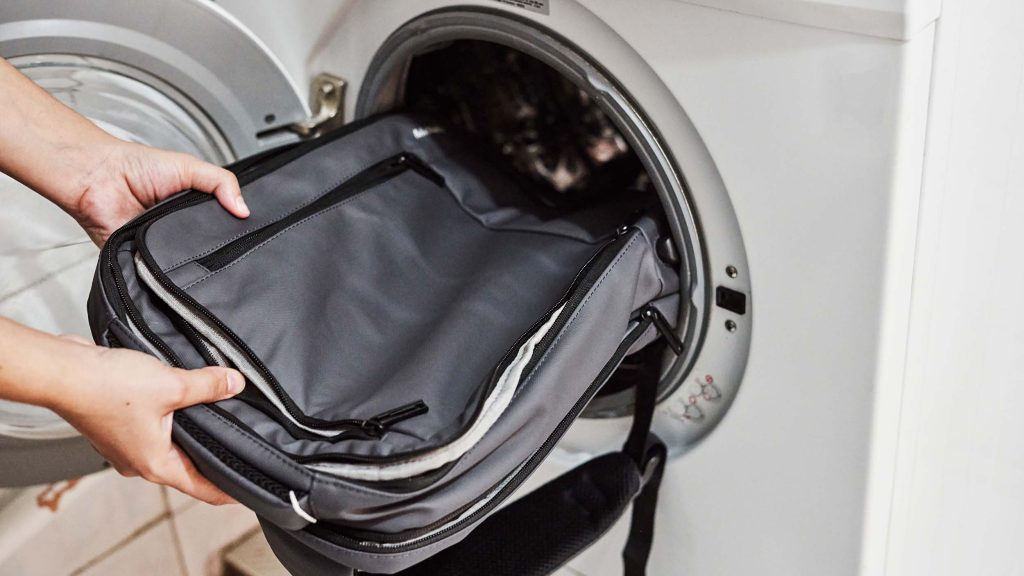
- Washer: usually yes. Most plain nylon and polyester backpacks handle a cold, gentle cycle inside a mesh laundry bag with a small amount of liquid detergent.
- Dryer: no. Heat softens the glue and waterproof coatings, warps the foam in straps and back panels, and makes plastic buckles brittle.
- Skip the machine entirely for leather or suede trim, internal frames, hiking packs with a suspension system, and anything tagged spot clean only.
- Air dry upside down with every pocket unzipped, in front of a fan. Budget 12 to 48 hours, so wash on a Friday night.
- If the pack smells rather than looks dirty, an enzyme soak does more than a second round of detergent.
Yes, you can put most fabric backpacks in the washing machine, and no, you should not put one in the dryer. Cold water on the gentle cycle inside a mesh bag is safe for the average nylon or polyester school pack. The dryer is what turns a tired backpack into a flaking, misshapen one.
The one thing that decides it is the sewn-in care tag plus what the bag is made of. Below is how to read both, and how to get a pack dry by Monday morning without heat.
What’s in this guide
- Can you put a backpack in the washing machine?
- Which backpacks should never go in the washer?
- How do you wash a backpack without wrecking it?
- Can you put a backpack in the dryer?
- How do you dry a backpack fast without heat?
- What if the problem is smell, not dirt?
- How often should a school backpack be washed?
- When is a backpack past saving?
- Frequently asked questions
Can you put a backpack in the washing machine?
Most of them, yes. A standard school backpack made of woven nylon or polyester with plastic hardware and a foam back panel washes fine on cold and gentle. Those fibers are synthetic, they don’t shrink at low temperatures, and the dye is usually solution dyed so it doesn’t bleed much.
The care tag is still the deciding vote. Plenty of brands print hand wash or spot clean because it’s the safest instruction they can give, not because the machine will destroy the bag. A tag that says spot clean only on a pack with leather patches or a rigid frame, though, means what it says.
Machine type matters more than people expect. A front loader or a top loader without a center agitator tumbles the bag gently. An old-style agitator can catch a shoulder strap and yank on the stitching where it anchors to the body, which is the single most expensive part of a backpack to lose.
Which backpacks should never go in the washer?
Hand wash or spot clean these instead of running the risk: anything with leather or suede trim, hiking and camping packs with internal aluminum stays or a molded frame, vintage or heavily structured bags, and packs with a glued-on logo patch that’s already lifting at the edges.
Leather stiffens and goes blotchy once it’s soaked and dried without conditioning. Frames can bend in a spin cycle and never sit right on your back again. Adhesive-backed patches and reflective strips lift once water gets under the edge.
Two more things to pull out first. Hydration bladders and their hoses get cleaned separately, and any battery bank or charging cable built into a commuter pack has to come out completely, along with the wiring if it’s removable.
How do you wash a backpack without wrecking it?
Empty it, prep it, bag it, cold gentle cycle. That’s the whole routine, and the prep is the part people skip.
Start by turning the pack upside down and shaking out every compartment, including the little zip pocket nobody uses. Vacuum the crumbs and pencil shavings from the seams with a crevice tool. Wet crumbs turn into a paste that survives the wash and smells later.
Pre-treat the greasy spots. Dab a little liquid detergent straight onto stains on the shoulder straps and back panel, work it in with a soft toothbrush, and let it sit fifteen minutes. That’s the same approach that works on body-oil buildup in fabric, whether it’s a strap or the yellowing under the arms of a white shirt.
Then unzip everything, buckle the buckles so they don’t flap, tuck or tie the loose straps, and put the whole thing in a mesh laundry bag or an old pillowcase knotted shut. Cold water, gentle or delicate cycle, a small amount of liquid detergent, and an extra rinse if your machine offers one.
Three things to leave out. No chlorine bleach, which weakens nylon fibers and eats color. No fabric softener, which leaves a film that traps odor and kills whatever water repellency the fabric had. And no powder detergent, which loves to lodge in seams and dry white.
Can you put a backpack in the dryer?
No. This is the part of the question with a firm answer, and it holds even on the low setting.
Most backpacks have a polyurethane coating on the inside face of the fabric, which is what makes them shed a light rain. Heat plus moisture speeds up the breakdown of that coating, and it comes out of a dryer tacky or flaking off in little grey crumbs. Once that starts, it never stops.
Heat also does slow damage to the parts that make a pack comfortable. The closed-cell foam in the shoulder straps and lumbar panel compresses and sets into whatever shape it tumbled in. Plastic buckles, adjusters and zipper pulls get brittle, and adhesive on logo patches and reinforced panels softens and lets go.
There’s a practical annoyance too. Metal hardware and zipper sliders bang around the drum for forty minutes and can chip the enamel, which then rusts and marks the next load. If you truly need to speed things up, use the no-heat air fluff setting for ten minutes with two dry towels, then finish the job on a hanger.
How do you dry a backpack fast without heat?
Hang it upside down with every zipper open and put a fan on it. Upside down matters because water pools in the bottom corners and the seam allowances, which is exactly where mildew starts.
Stuff the main compartment loosely with a dry bath towel for the first hour, then pull that towel out and replace it with a dry one. It’s the same trick as newspaper in wet sneakers, and it cuts hours off the total. After that, leave it hollow so air can move through.
A box fan aimed at the open compartment is worth more than sunshine. Direct summer sun fades dye and degrades nylon over time, so dry outdoors in the shade if you’re going outside at all. Expect 12 hours for a thin drawstring bag and up to 48 for a padded pack with a laptop sleeve.
Do not put it away until the padding feels dry, not just cool. A backpack zipped shut while damp comes back with that sour, closed-up smell, the same mildew problem behind the dirty sock smell coming out of a window AC.
What if the problem is smell, not dirt?
Use an enzyme cleaner or an oxygen bleach soak, not more detergent. Odor in a backpack comes from bacteria feeding on sweat, spilled milk, and whatever leaked out of a lunch container. Detergent lifts surface soil, but enzymes break down the protein and starch residue that the bacteria are actually eating.
For a general funk, dissolve a scoop of oxygen bleach (sodium percarbonate) in a tub of warm water and soak the pack for an hour before its normal cold wash. For a specific milk or protein spill, use an enzyme laundry additive on the spot first and give it half an hour to work. Skip both on anything with leather trim.
A musty, basement-like smell is mildew and needs a different move: a cup of white vinegar in the rinse, then a genuinely thorough drying. Fabric that dries slowly holds odor stubbornly, which is why chlorine and mildew smells cling to swimsuits after a summer of pool days.
What doesn’t work is a scented spray. It sits on top of the food source and buys you about a day.
How often should a school backpack be washed?
Once at the start of the school year, once over winter break, once at the end, plus any time something spills. That’s it for most kids. Over-washing a coated pack wears out its water resistance faster than daily use does.
Between washes, the maintenance that matters is emptying it. Make Friday afternoon the moment the bag gets turned upside down over the trash, since a forgotten yogurt tube over a weekend causes more damage than a month of dust.
Wipe the outside with a damp cloth and a drop of dish soap when it looks grubby. Spot cleaning the bottom panel, which is the part that sits on cafeteria floors and bus aisles, handles most of what people think requires a full wash. If you’re already deep in back-to-school prep, this pairs well with the same round-up-and-sort logic behind clothes younger kids can manage on their own.
When is a backpack past saving?
When the shoulder strap anchors are tearing away from the body. That’s a load-bearing failure, and once the stitching at those anchor points starts pulling through the fabric, no wash or repair patch is going to hold a full load of textbooks.
Two other retirement signs: interior coating that flakes off onto everything you put inside, and foam padding that has crumbled into grit you can feel through the fabric. A broken zipper is not one of them, since a replacement slider is a cheap fix and usually a five-minute job with pliers.
If it is time to replace, the wash-friendliness of the next one is worth thinking about now. Plain woven fabric with plastic hardware and no leather trim cleans up in the machine year after year. Cotton bodies wash easily too, though they take longer to dry.
JanSport Hatchet Rolltop Backpack

A straightforward nylon pack with a padded 17-inch laptop sleeve and dual water bottle pockets, which is the build that tolerates a cold gentle cycle best. No leather trim, no internal frame, nothing glued on to lift at the edges. The rolltop closure also means fewer zippers to fail before the fabric does.
- Padded 17-inch laptop sleeve
- Dual water bottle pockets
- Plain nylon build with no leather trim
Vera Bradley Mini Banbury Backpack

Vera Bradley Women's Premium Cotton Mini Banbury Backpack, Moorish, One Size
For anyone who wants a smaller everyday bag in cotton rather than coated nylon, this one skips the polyurethane layer that’s the usual casualty of washing and drying. Cotton takes longer to air dry, so plan around the weekend. Check the sewn-in tag before its first wash, as always.
- Premium cotton body instead of coated nylon
- Compact mini size for light daily carry
Other backpacks and household picks worth a look sit in the Berry Finds deals hub during the back-to-school stretch.
Frequently asked questions
Can you put a backpack in the dryer on low heat?
No. Low heat still reaches temperatures that soften the adhesives holding panels and patches together and degrade the polyurethane coating on the inside of the fabric. It also permanently compresses the foam in the straps and back panel. Air fluff with no heat for a short run is the only dryer setting that’s defensible, and a fan does the same job with less risk.
What washing machine setting is best for a backpack?
Cold water, gentle or delicate cycle, low spin, with an extra rinse if your machine has one. Use a small amount of liquid detergent, and put the pack in a mesh laundry bag or knotted pillowcase so the straps can’t wrap around anything. A front loader or an agitator-free top loader is much kinder than an old center-post agitator.
How long does a backpack take to air dry?
Anywhere from 12 hours for a thin drawstring bag to 48 hours for a padded pack with a laptop sleeve and foam back panel. Hanging it upside down with all pockets unzipped and a fan pointed into the main compartment cuts that time significantly. Don’t put it away until the padding feels dry rather than just cool.
Does washing a backpack ruin its water resistance?
It can wear down the durable water repellent finish on the outer fabric, especially with repeated washes. Fabric softener makes it worse by leaving a residue that holds water instead of beading it. If beading has stopped, a spray-on fabric repellent applied to a clean, dry pack restores most of it.
Can you wash a backpack with a padded laptop sleeve?
Yes, as long as the laptop is out and the sleeve is fabric-and-foam rather than a rigid molded insert. The foam soaks up a fair amount of water, so drying takes considerably longer than the rest of the bag. Squeeze the sleeve gently between two towels before hanging the pack to dry.
The honest version of this is short: the washer is fine, the dryer is not, and the drying time is the only part that requires planning. Wash on a Friday, hang it upside down with a fan on it, and it’s ready before the school week starts.
Updated August 2, 2026. If the bag comes out clean and still smells, it’s not a detergent problem, it’s a residue problem, and the enzyme soak is the step to add.